Furnace Blower Motor Repair

Furnace blower motor repair in Brighton when the air stops moving

Furnace Blower Motor Repair in Brighton is for a furnace that lights and gets hot but pushes little or no air through your vents, or a blower that hums without spinning. We test the run capacitor, the motor and the blower wheel, find the part that actually failed, and get warm air moving through your Brighton home again so the furnace stops shutting down on its high limit switch.

Service overview

What Blower Motor Repair in Brighton Covers

Furnace Blower Motor Repair in Brighton is a furnace repair service that restores the airflow that carries heat from the furnace into your rooms. The blower motor turns a fan, called the blower wheel, that pushes air across the hot heat exchanger and through the ducts. When the motor, its run capacitor or the wheel fails, the furnace can light and get hot while almost no warm air reaches the vents. Left alone, the trapped heat trips the high limit switch and shuts the burners off.

Brighton homeowners usually notice a blower problem in one of a few ways: weak airflow at the registers, rooms far from the furnace staying cold, a humming sound from the furnace with no air moving, or a furnace that shuts off after a few minutes and restarts later. Each points to a different part. A humming blower usually means a capacitor or seized bearings, weak airflow often means a dirty wheel or filter, and no blower at all can mean the motor, its module or the control board relay.

Quality Furnace Blower Motor Repair in Brighton

Practical benefits

What Blower Motor Repair Gets You

A furnace that heats but doesn't move air is not doing its job, and it can overheat while trying. Blower motor repair in Brighton restores the airflow that carries heat into your rooms, and these are the outcomes we focus on.

01

Warm air back in every room

The blower is what pushes heated air through your ducts. When the motor or capacitor fails, rooms farthest from the furnace go cold first. Restoring correct blower speed brings warm air back to every register, not just the ones closest to the furnace.

02

No more overheating shutdowns

Without airflow, heat builds up inside the furnace until the high limit switch shuts the burners off. Repeated overheating stresses the heat exchanger. A working blower keeps temperatures in the range on the furnace's rating plate.

03

The cheapest fix first

A failed run capacitor is one of the most common blower problems, and it is far less expensive than a new motor. We test the capacitor before replacing anything, so you don't pay for a motor when a capacitor would do.

04

Longer motor life

A motor working against a clogged filter or dirty blower wheel draws more power and wears out faster. Fixing airflow problems along with the failed part helps the new capacitor or motor last.

How service works

What Happens When You Call

Blower motor repair in Brighton follows five steps, from the first phone call to warm air at every register. Here is what happens and roughly how long each step takes.

STEP 01

Phone triage

When you call (720) 715-9099, we ask whether the blower hums, runs weakly, runs constantly or doesn't run at all, and whether the burners are lighting. We also ask you to check the filter and thermostat fan setting, which solves some airflow complaints right away.

Tools and methods

Tools and Methods We Use

01

Capacitor tester

Measures the microfarad value of the blower's run capacitor to confirm whether it is the cause of a humming or slow-starting motor.

02

Clamp ammeter

Measures blower motor amp draw while running, which shows whether the motor is healthy, straining or failing.

03

Digital multimeter

Checks voltage at the control board and motor terminals, and continuity through motor windings and safety switches.

04

Digital manometer

Measures static pressure in the ductwork to find airflow restrictions that make blower motors work harder.

05

Probe thermometers

Measure supply and return air temperatures to confirm temperature rise is within the furnace's rated range after the repair.

06

Capacitor testing

We measure the run capacitor's microfarad value and compare it to the rating printed on its label. A capacitor outside its tolerance can cause humming, slow starts and overheating, even if it looks normal.

07

Amp draw comparison

We measure the current the blower motor draws and compare it to the full load amps on its nameplate. High draw points to a struggling motor or airflow restriction, and no draw points to a power or control problem.

08

ECM signal and power check

For ECM motors, we check line power and the low-voltage control signal from the furnace separately. This tells us whether the motor, its module or the furnace control board is at fault.

09

Static pressure measurement

We measure static pressure in the ductwork when airflow is weak. High static pressure shows restrictions from filters, ducts or coils that strain the blower and need to be fixed for a lasting repair.

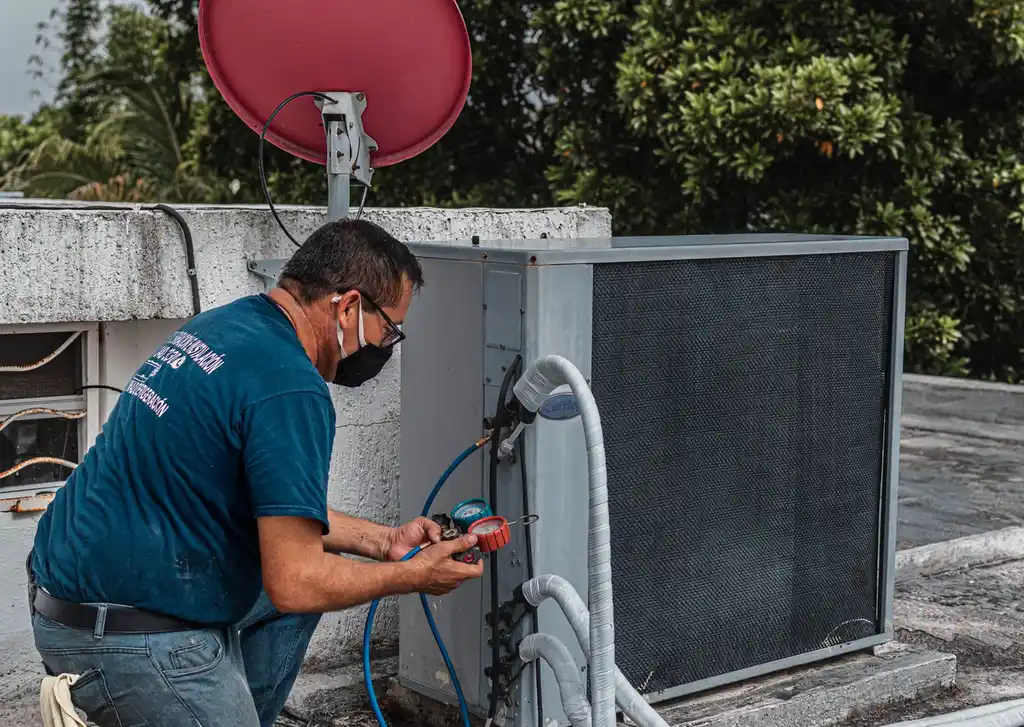
Professional service tools

Where this service fits

When to Call for Blower Motor Repair

01

Your furnace lights, but you hear a hum from the blower compartment and almost no air comes out of the vents.

We turn the furnace off to protect the motor, test the run capacitor and check whether the shaft turns freely. A failed capacitor is replaced on the spot, and if the motor itself has failed, we replace it. The blower starts right away, airflow returns to every register, and the motor runs within its rated amp draw.

02

Rooms at the far end of the house stay cold, and the furnace shuts off after a few minutes of running.

We check the filter, blower wheel, capacitor and motor speed, and measure duct static pressure. A dust-caked wheel or weak capacitor is a common cause, and we fix the airflow problem along with any failed part. The back rooms warm up again and the furnace stops cycling off on its high limit switch.

03

After a winter storm causes a power flicker, your newer furnace lights but the blower never starts.

We test the ECM motor's power and control signals to find out whether the module or motor failed, replace the failed component and set it up for your furnace model. The variable-speed blower works again, ramping smoothly, and the house heats evenly.
Local execution

Blower Motor Repair in Brighton Homes

Furnace blower motor repair in Brighton follows the same pattern most winters. The first long cold snap of the season pushes blower motors through extended run cycles, and that is when weak capacitors and worn bearings give out. Brighton's growth adds another factor: construction dust and dry winter air clog filters and coat blower wheels faster than in many areas, and a dirty wheel can reduce airflow enough to overheat the furnace. The furnace mix matters too. Older homes near downtown usually have furnaces with PSC blower motors and run capacitors, which are straightforward to test and repair. Newer subdivisions like Brighton Crossing, Indigo Trails and Sage Creek often have two-stage or variable-speed furnaces with ECM motors, where the electronic module can fail separately from the motor itself. Our heater repair in Brighton adjusts the diagnosis to the motor you have, so you pay for the part that actually failed.

01

Downtown Brighton

Older furnaces here typically use PSC blower motors with run capacitors, so a failed capacitor is often the first thing we find when airflow drops.

02

Brighton Crossing

Many newer homes have variable-speed furnaces with ECM blower motors, where diagnosis separates a failed electronic module from a failed motor.

03

Prairie Center

Construction nearby means more dust, so blower wheels and filters in these homes tend to load up faster and restrict airflow sooner.

04

Bromley Park

Furnaces in established subdivisions are often reaching the age where blower bearings and capacitors wear out, especially during long cold snaps.

05

Construction dust in a growing area

New construction around Brighton puts more dust in the air, which clogs filters and coats blower wheels faster. A dirty wheel moves less air and makes the motor work harder.

06

Long run times during cold snaps

When temperatures drop into the teens or below, blower motors run for long stretches. Weak capacitors and worn bearings often fail during these periods, when heat is needed most.

07

Power flickers during winter storms

Variable-speed ECM motors rely on electronic modules that can be damaged by power surges. A blower that stops after a storm often points to the motor module.

Problems we solve

Blower Problems We Fix in Brighton

Blower problems in Brighton furnaces usually show up in one of four ways. Each one points to a different part, and matching the symptom to the cause is how we avoid replacing parts that still work.

01

The blower hums but the fan doesn't spin

We test the run capacitor against its rated value and check whether the motor shaft turns freely. A weak capacitor is replaced on the spot. If the bearings are seized or the windings have failed, we replace the motor and confirm amp draw is within the nameplate rating. A motor that hums without turning overheats quickly, and running it this way can burn out a motor that only needed a new capacitor.

02

The burners light but little air comes out of the vents

We check the filter, blower wheel and capacitor first, since a clogged filter or dust-caked wheel can cut airflow sharply. If those are fine, we test the motor and its speed settings and check duct static pressure for restrictions. Without airflow, heat builds up and trips the high limit switch, causing repeated shutdowns and extra stress on the heat exchanger.

03

The blower runs all the time, even with no heat call

We confirm the thermostat is set to AUTO, then check the control board relay and the high limit switch. A stuck relay or a limit switch reacting to overheating can keep the blower running, and each needs a different repair. A blower that never stops wastes electricity and can mask an overheating furnace or a stuck control relay.

04

A variable-speed blower stops completely after a power flicker

We test power and control signals to the ECM motor separately to find out whether the module or the motor failed. The failed component is replaced and set up for your furnace so the blower ramps smoothly again. A failed ECM motor or module leaves the house with no airflow even though the burners light normally.

A practical standard for every visit.

Clear planningPrepared arrivalsCareful workLocal follow-through

Experience in the details

Matching the Repair to the Motor Type

Furnace blower motor repair in Brighton starts with figuring out whether the problem is the motor, the capacitor that starts it, the blower wheel it turns, or the control board that tells it when to run. Older furnaces typically use PSC motors with a run capacitor, while many newer two-stage and variable-speed furnaces use ECM motors with an electronic module. Each fails differently and is tested differently, and a correct diagnosis avoids replacing a motor that only needed a capacitor.

  • We test the run capacitor against the microfarad rating printed on its label before deciding a motor has failed.
  • We measure blower motor amp draw and compare it to the nameplate rating, which shows whether a motor is straining or failing.
  • We diagnose ECM variable-speed motors by checking the control signal and power separately, since the module and the motor can fail independently.
  • We inspect and clean the blower wheel, since a dust-caked wheel can cut airflow enough to trip the high limit switch.
  • We check static pressure in the ductwork when airflow is weak, because restricted ducts or filters strain blower motors and shorten their life.
Furnace Blower Motor Repair in Brighton, Colorado

Where we work

Brighton and three nearby communities.

Check my address

Before the visit

Frequently Asked Questions

Still wondering?(720) 715-9099

A furnace that heats but blows little or no air usually has a blower problem: a failed run capacitor, a worn motor, a dirty blower wheel or a control board relay that isn't sending power. A clogged filter can also choke airflow. Replace the filter first. If airflow stays weak or the blower only hums, call for a blower diagnosis.

A humming blower that doesn't spin almost always points to a failed run capacitor or seized motor bearings. Turn the furnace off to protect the motor, since a motor that hums without turning overheats quickly. Testing the capacitor tells us whether a capacitor alone will fix it or the motor needs replacing.

A blower that never stops is usually set to fan ON at the thermostat instead of AUTO. If the setting is correct, a stuck relay on the control board or a limit switch problem can keep the blower running. A blower that runs constantly with no heat call should be checked, because it can mean the furnace is overheating.

Most blower capacitor replacements take under an hour once diagnosed. A PSC motor replacement typically takes one to two hours, depending on how the blower assembly is mounted. ECM variable-speed motor replacements can take longer, and brand-specific modules may need to be ordered, in which case we explain the timing.

Your next step is waiting

Weak airflow? Get blower motor repair in Brighton

If your furnace runs but little or no air comes out of the vents, the blower is the place to start. Call (720) 715-9099 to schedule blower motor repair in Brighton and get the price before any work begins.

Start with the basics

Talk to Furnace Repair Pros

Call us at (720) 715-9099 with your furnace problem and your address. Tell us what you are seeing, whether that is no heat, short cycling, a blinking light or a noise you have not heard before, and we will set up a visit. You can also send the form on this page with a short description and the best time to reach you.

SERVICE REQUESTLet us map it out.

No spam or pressure. Just a helpful service conversation.

Thanks. Your request is in and the team will follow up shortly.

Need service?Call now